
More Than Voting Machines: The System Is Being Targeted, Too
On the morning of November 6th, 2024, as the American nation rose once again, phones lit up on nightstands, televisions flickered to life in living rooms and break rooms, and across time zones, millions of eyes met the same headline at once:
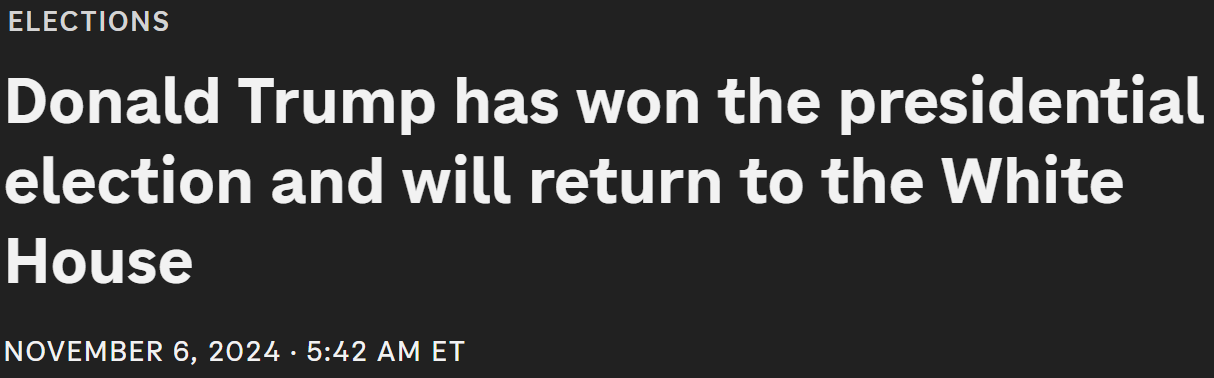
Donald Trump had done it again. He had won the 2024 U.S. presidential election.
Some stood in complete disbelief, terrified, and immediately ran a mental forecast for the coming four years in America. Others rejoiced, bragging about how they’d “owned the libs” and how Trump—just like Ronald Reagan, who he’d plucked the slogan from—was going to “Make America Great Again.”
Trump and Reagan share an unexpected number of parallels. They shared a campaign slogan, both had a history of performing in Hollywood productions, and both worked in conjunction with the Heritage Foundation and their dark-money apparatus.

A Reagan-Bush (Sr) campaign pin from the 1980 election preserved by the Smithsonian.
The Heritage Foundation boasts that former President Ronald Reagan enacted more than 60% of the goals listed in its very first Mandate for Leadership document before the end of his first year. As of September 2026, Heritage publicly declares to donors that Donald Trump has already implemented 53% of Project 2025 while shilling for more money.
That brag of 53% by the very organization that developed Project 2025 is just additional evidence of Trump’s involvement in a much larger unified framework. Most Americans now know that this plan has been orchestrated and set in motion long before the 2024 election.
But on November 6th, 2024, while the average American was processing the news, the same billionaire-funded apparatus behind Mandate for Leadership 2025—a.k.a. Project 2025—was already at work.
Some prepared the 26 executive orders that Donald Trump signed on inauguration day in January 2025. Many prepared themselves for their new roles as U.S. government officials. The rest got to work preparing for the midterm elections, while the Project 2025 architects nonchalantly launched an ‘election fraud’ tracker on their website.
This is a piece of the puzzle that illustrates how we arrived here.
Less than 2 years later, the Department of Justice has sued 30 states to obtain their voters’ rolls. 16 others have given them up without a fight.
Whistleblowers exposed that agents with only 1-2 hours of training are scouring those very voter rolls under the Department of Homeland Security’s secret “Unlawful Voter Initiative,” with quotas to identify 40 ‘unlawful voters’ a day.
The U.S. Election Assistance Commission (EAC)—the election machine regulator—has no commissioners. One commissioner, Donald Palmer, left the EAC to work at the Heritage Foundation two months before Trump purged the rest of the commissioners in July.
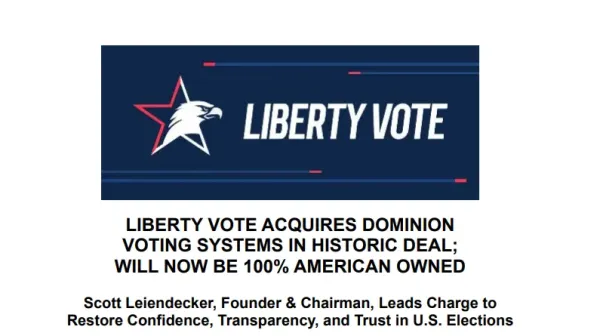
An excerpt from the official statement announcing Dominion’s change of name following purchase by former Republican election official Scott Leiendecker.
Meanwhile, brand-new voting systems set to replace Dominion’s electionware are still moving through EAC certification. Electionware created by a former Republican official who is currently monopolizing electionware and has promised to follow Donald Trump’s executive orders on elections—illegal executive orders that the courts have since overruled.
Maybe all of these stories are nothing more than a coincidence, but the evidence suggests we are witnessing a multi-faceted operation targeting the American electoral infrastructure as the clock runs down to the November midterms.
THE VOTER ROLL DRAGNET
In May 2025, just months into Donald Trump’s second term, the Department of Justice (DOJ) sent demand letters to all 50 states for unredacted copies of their voter rolls.
Over 30 states refused, as handing over the unredacted files would violate state privacy laws and expose voters’ sensitive voter data, including driver’s license numbers, partial Social Security numbers, addresses, party affiliation, and voting history.
The Department of Justice initiated legal action against those 30 states. Many of those lawsuits, which the DOJ initiated, have proven unsuccessful, as the courts rule the DOJ has no legal right to voters’ private data.
The last protection against total fascism in America is our judicial system, which has been infiltrated as deeply as the SCOTUS by the very structure of the Heritage Foundation, including their very close friend Leonard Leo and his dark-money judicial pipeline known as the Federalist Society.
Sixteen states—namely Alabama, Alaska, Arkansas, Florida, Indiana, Iowa, Louisiana, Mississippi, Nebraska, Ohio, Oklahoma, South Carolina, South Dakota, Tennessee, Texas, and Wyoming—willingly gave this privileged data to the DOJ without any challenge. States like Ohio, Florida, Indiana, and Iowa have taken it further, entering a 20-year data-sharing agreement.
No court filing needed.
Recent whistleblower disclosures made to Congress show that DHS has taken the state voter rolls obtained through the DOJ and pulled them into a USCIS Fraud Detection and National Security program called the “Unlawful Voter Initiative.”
The voter rolls are only one aspect of it. DHS is combining that information with privately held, proprietary data.
Proprietary. You know, the kind collected outside government databases, where the public has almost no visibility into what was gathered, where it came from, or how it is being used?
This indicates that they are likely using “private” data obtained from a corporate-state surveillance organization, such as Palantir and the ImmigrationOS platform it created for ICE.
Wherever the data comes from, it is used to help ‘investigate’ voter rolls. Agents receive a mere 2 hours of training before starting. Each agent is expected to meet a quota of a minimum 40 people/day who could be “unlawful voters.”
It’s unclear what criteria they use to determine legal voter registration. This is all the more reason to keep your voter registration up to date and ensure you haven’t been purged. A voter who has been removed from the rolls before election day cannot do anything on election day to be able to vote.
Each person identified as a potential “unlawful voter” by an agent who received less than two hours of training can have a federal TECS law-enforcement record created on them.
TECS is a federal law-enforcement and intelligence-sharing platform that connects with other law enforcement databases and can create lookouts that tell federal agents what to do if they come across that person.
This means the verdict of a roughly 12-minute voter investigation using data we can’t see becomes part of a federal law-enforcement record that determines what happens to you.
Knowing you could end up in a federal law-enforcement database or targeted by ICE—as ICE head Markwayne McMullin has pledged—while voting because someone spent twelve minutes looking at your name is enough to make people think twice about showing up to the polls at all.
As of this week, the NAACP is suing ICE, DHS, FBI to prevent sending agents to midterm polls.
Dissent in Bloom is a reader-supported publication. To receive new posts and support my work, consider becoming a free or paid subscriber.
WOULDN’T YOU KNOW IT: PROJECT 2025
This voter record debacle is not the first. The Trump administration has targeted American voter rolls for years, with the first voter roll request coming in July of 2017. As a result, seventeen states provided public, redacted data, and no lawsuits were filed on states that refused.
In fact, most of what we are seeing is not new. It has all been tried before, in Trump’s first term.
The problem the Heritage apparatus faced during Trump’s first administration was a lack of government architecture necessary to weaponize the DOJ against non-compliance. That is precisely why Project 2025 explicitly outlined the targeted dismantling of the DOJ as an absolute, mandatory goal.
Pair this with DOGE’s systemic purging of thousands of government employees to “cut waste,” while other officials voluntarily chose to step down as an ethical stance, and the replacement of all of them from a pre-planned personnel database crafted by the Heritage Foundation, and you have the perfect recipe for a fascist takeover.
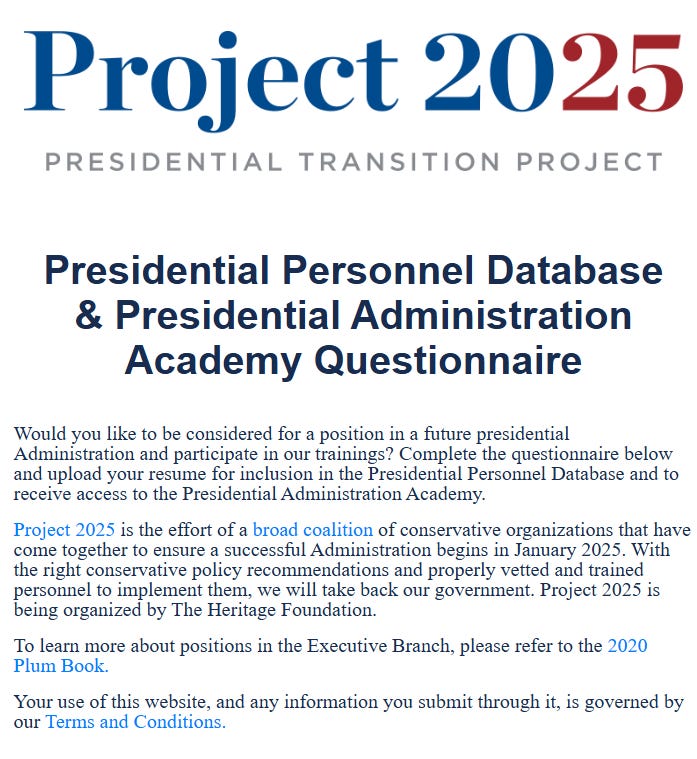
This passage is an excerpt from the Project 2025 Personnel Application dated April 2023.
Historical records show MAGA-ideologues were invited to apply to be part of the Project 2025 presidental personnel database as far back as April 2023.
This is precisely how we got the framework for a loyal DOJ and DHS that does whatever the Trump administration declares, including the goal of obtaining voter rolls.
And let's not overlook what Project 2025 actually says.
With the exception of discussing CISA and their function in the American electoral system, there are very few references to elections in the 887-page document.
CISA, formally known as the Cybersecurity and Infrastructure Security Agency, is the federal agency that helps protect the systems Americans rely on every day, including government networks, critical infrastructure like water and electric networks, and the technology (the ‘voting machines’) used to run elections.
CISA is specifically referred to as a tool of the "political left" in the Heritage Foundation's Project 2025, which also contends that it is bloated and should be functionally dismantled—including dismissing the entire CISA Cybersecurity Advisory Committee—and transferred to the Department of Transportation.
On the 1st day of his second term, the Trump administration did just that. By February, 17 CISA officials were placed on administrative leave, including 10 experts in election cybersecurity whose job was to help states prepare elections and stave off cybersecurity attacks.
CISA serves as the national coordinating body for critical infrastructure across sectors such as energy, communications, water, healthcare, finance, elections, and transportation. Not just transportation.
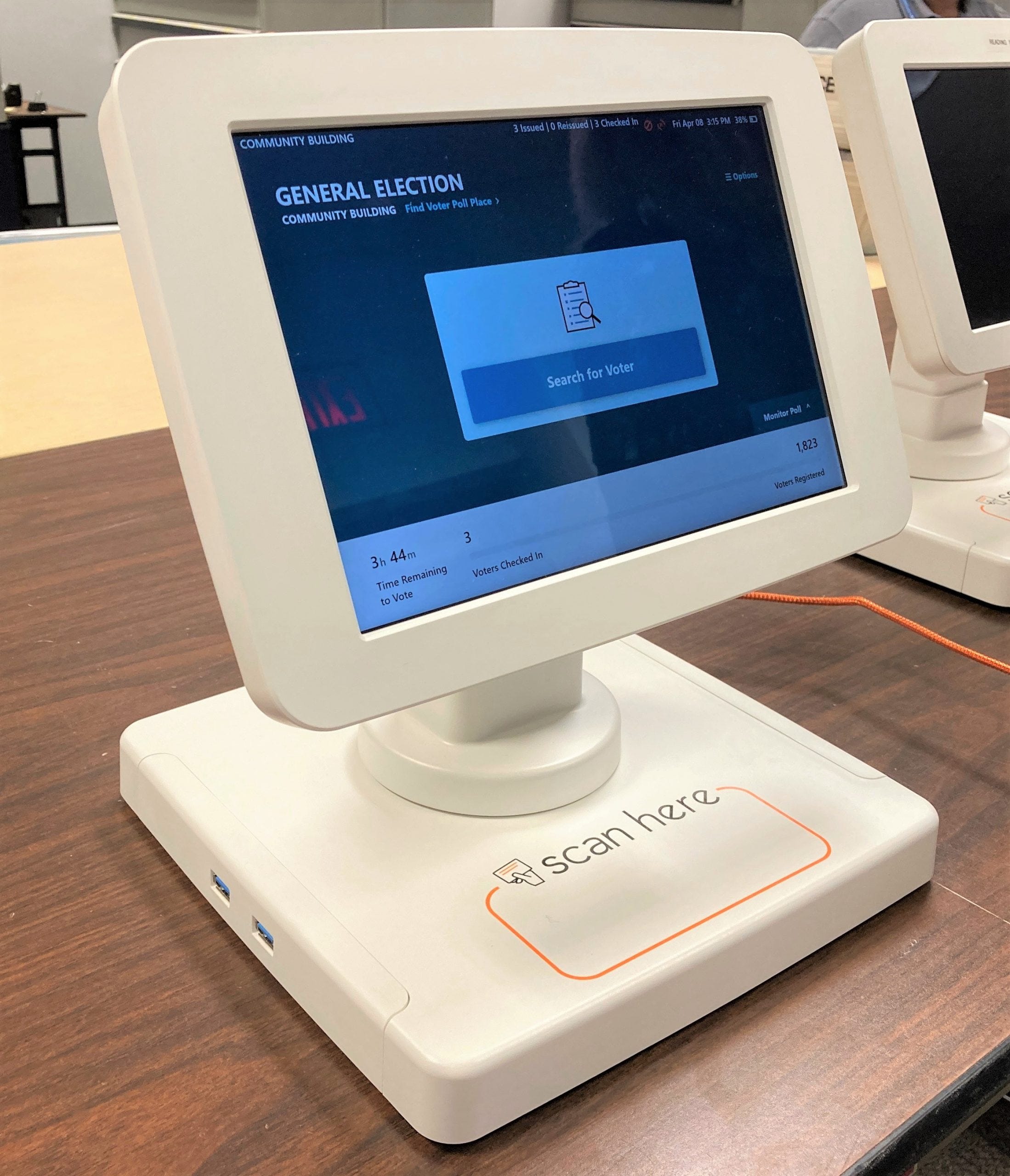
When voters check in on election day, officials use electronic pollbooks such as the one above, which are basically big iPads that verify voter registration and ID.
The cybersecurity agency specifically names electronic pollbooks and voter-registration databases as targets for compromise and manipulation. America runs the risk of these being targeted as a direct result of the Trump administration’s functional murder of CISA.
If these databases are faced a cybersecurity attack right before or on election day, voters would attempt to cast their ballots only to find out at the last minute that they are no longer registered.
In most states, voter-registration deadlines vary from anywhere from 8 to 30 days before an election, meaning you cannot just submit a brand-new registration at the polls if something is wrong with your registration.
Federal law says you can cast a provisional ballot if they can’t locate you in the system. Sure. But consider the chaos, confusion, delays, provisional ballot use, and the significant amount of paperwork that election workers need to check. The wait to vote would stretch on longer and longer, and the chaos would grow as the day went on.
It would be a situation that mirrors the 2024 presidential election, when hundreds of bomb threats were called into voting districts with a history of voting progressive, with many voters giving up and leaving without casting a ballot.
It could also create grounds for challenging the election afterward, especially if questions remained about how many voters were affected or whether compromised registration data changed who was able to vote.
Even the White House’s 2026 ‘election-integrity page’ explicitly states that the election systems “most vulnerable to exploitation” include:
voter-registration databases;
electronic pollbooks, like KNOWiNK;
official election websites;
other centrally managed election-related data storage facilities.
So, why did the Department of Homeland Security specifically seek to eliminate the CISA election cybersecurity program—a program focused on preventing that—in its FY2026 budget?

Before the budget was finalized and signed into law, Congress ultimately blocked the above proposal for a $39.6 million cut from the Election Infrastructure Information Sharing and Analysis Center. However, CISA’s total FY2026 funding dropped 9% from $2.873 billion in FY2025 to $2.605 billion.
By the start of 2026, CISA had eliminated about 35% of all staff, with numerous divisions and programs completely shut down.
CISA helps protect voting machines from cybersecurity attacks, but so does the EAC. Now let’s meet the man who sits at the intersection of both.
Dissent in Bloom is a reader-supported publication. To receive new posts and support my work, consider becoming a free or paid subscriber.
ONE MAN SITS ON BOTH SIDES OF YOUR BALLOT?
Meet Scott Leiendecker. Leiendecker is a former Republican election official who worked at the St. Louis Board of Election Commissioners for six years.

In October 2025, Dominion Voting Systems—the voting-machine company that spent years as a target of the “Stop the Steal” Trump movement—was privately purchased and renamed Liberty Vote.
Leiendeckers’ purchase of the voting machine company was made public using the services of Logan Circle Group, or LCG. A company whose motto is plastered in bold text on the front page of their website: “We Fight for America First.”
Before you realize it's a dog whistle for MAGA, “America First” sounds patriotic, much like Elon Musk's America PAC that is sneakily gathering your private voter information.
Harlan Hill, a former Democrat turned into a Trump campaigner during the 2016 presidential election, runs Logan Circle Group. Logan Circle Group was paid for millions of dollars’ worth of 2024 digital advertising by the American Principles Project PAC, including expenditures that explicitly supported Trump.
He didn’t just hire the company. No, Leiendecker himself created the press release for Liberty Vote, and Logan Circle Group released it. The press release was full of MAGA-coded catch phrases and falsities.
For example, Dominion was never owned by foreign entities—it was purchased by American venture capitalists—but this fact did not stop Leiendecker from starting off the announcement boasting that Dominion (Liberty Vote) "will now be 100% American owned."
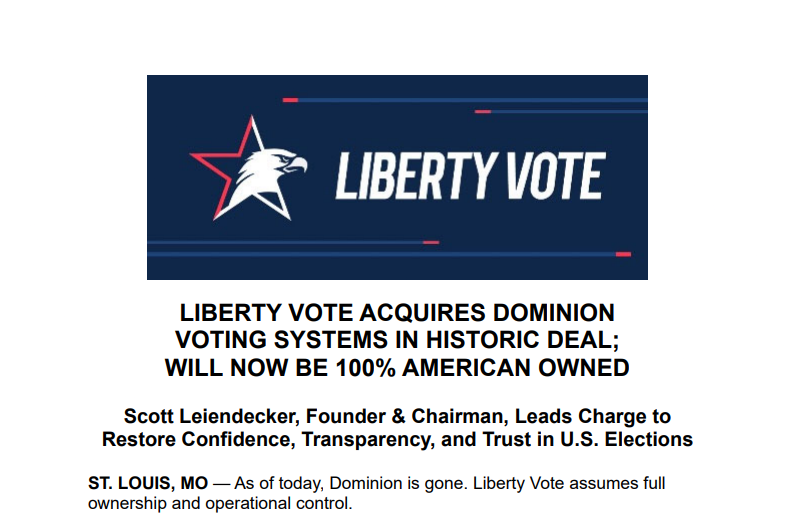
Leiendecker also used the announcement to promise “compliance with President Trump’s executive order and ensuring election security and compliance with federal standards.”

This statement was made in reference to an executive order that courts had already ruled as illegal: “Preserving and Protecting the Integrity of American Elections,” from March 2025.
Of course, upon reading this press release, many states and localities that have contracts with Dominion—contracts that Leiendecker acquired with the company—erupted in panic. That's a sizable number of people.
As of the 2024 election, Dominion provided election equipment to jurisdictions containing more than a quarter of all registered voters in the United States, with some Dominion equipment in use across 27 states.
Facing the imminent collapse of his commercial interests, he launched a PR campaign on established media platforms like CNN and VoteBeat to launder his now-battered public image. He denied being a MAGA affiliate:
“I’m an election person. I’m on my own side. I’m on the American people’s side. I’m on democracy’s side.”
— Scott Leiendecker.
When asked if he thought the 2020 election was stolen, he denied it was but told CNN he preferred not to discuss it. Leiendecker stated, “I don’t really like to go back and talk about what happened in 2020. I’m kind of moving forward. I don’t want to relitigate the 2020 elections. We’re in 2025 now. I’m focused on 2026 and 2028.”
He later explicitly told interviewers that Dominions’ value had decreased enough that he could purchase the company alone as a direct result of company devaluation following the actions of Trump’s “Stop the Steal” movement.
This was despite the fact that Dominon had won a sizeable $787.5 million in a lawsuit against Fox News in 2023 or the additional $67 million structured settlement from Newsmax in August 2025.
Then, right before the purchase of Dominion in October, the company reached confidential settlements with Sidney Powell and Rudy Giuliani, permanently dismissing both cases. Then it settled with One America News in early October.
We have a company that received at least $854 million—plus an undisclosed amount from these “black box” settlements—that was purchased by a single person. So, the “stop the steal” movement left the company devalued, and Leiendecker was miraculously able to purchase the entire company as a sole buyer using private funds? Really? He used no investors; no one knows how much Leiendecker actually paid.
In 2018, the private equity firm Staple Street Capital valued Dominion at $80 million.
In 2020, according to court records, the company's valuation grew to $226 million around the 2020 election.
By the time it sued Fox News et al., Staple Street—the largest shareholder of the Dominon—valued the company at near $800 million in 2023.
So how did it drop that much in value when, nearly three years after the start of the “stop the steal” movement, it was worth far more?
In any case, Leiendecker is now the only owner of the business and began making significant changes as soon as he acquired it.
Only a month after acquiring Dominion—and under the new name—Liberty Vote USA submitted an application to the EAC for Frontier 1.0. This new system is a complete overhaul of the voting software and some hardware for the Dominion machines (Dominion Democracy Suite 5.x + ImageCast hardware).
Liberty Vote applied November 25, 2025; the EAC accepted the application February 19, 2026. It is not yet certified as of 09/23/2026. Despite the fact that the EAC has no commissioners since July
But Dominion, or Liberty Vote, is not the only piece of the election infrastructure that is owned by the very man who spread falsehoods about American voting infrastructure in his first press statement after purchasing the company.
Long before purchasing, Doi Leiendecker founded an electronic poll pad company called KNOWiNK. He still runs it to this day. This person is on both sides of your ballot.
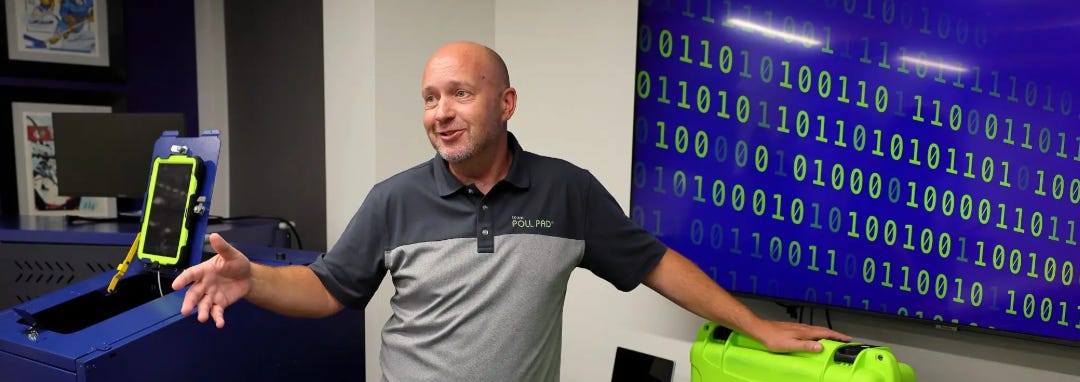
The electronic poll pads are used to check in and verify identification for elections, which are among the largest targets of the American electoral system, according to CISA and the White House.
KNOWiNK Electronic Poll Pads were the first to receive EAC approval in the United States.
41.6% of U.S. election jurisdictions used electronic poll books in the 2024 general election. That number is growing, with many states requiring them and many signing contracts with Leiendeckers company, KNOWiNK:
Some states, like New Jersey, require that all elections use electronic pollpads.
In Indiana, all 92 counties are using electronic pollbooks for early voting and on election day.
In Pennsylvania, more than half of the counties use them. Bucks County, Pennsylvania, authorized KNOWiNK pollpads for August 2026–July 2027 in a $79k contract.
Contra Costa County in California has a KNOWiNK contract; Solano County in California has one, too.
Meriwether County, Georgia, says it will begin testing the electronic pollbooks for the November election when early voting starts on September 28.
San Bernardino County, California, tells voters that they will have their ID verified using an electronic poll pad when they come to vote for the 2026 midterms.
CISA is not the only organization concerned about the security of electronic poll pads. KNOWiNK itself is a specific concern for several organizations. Y’know, despite the fact KNOWiNK calls itself “America’s Most Trusted Poll Book.”
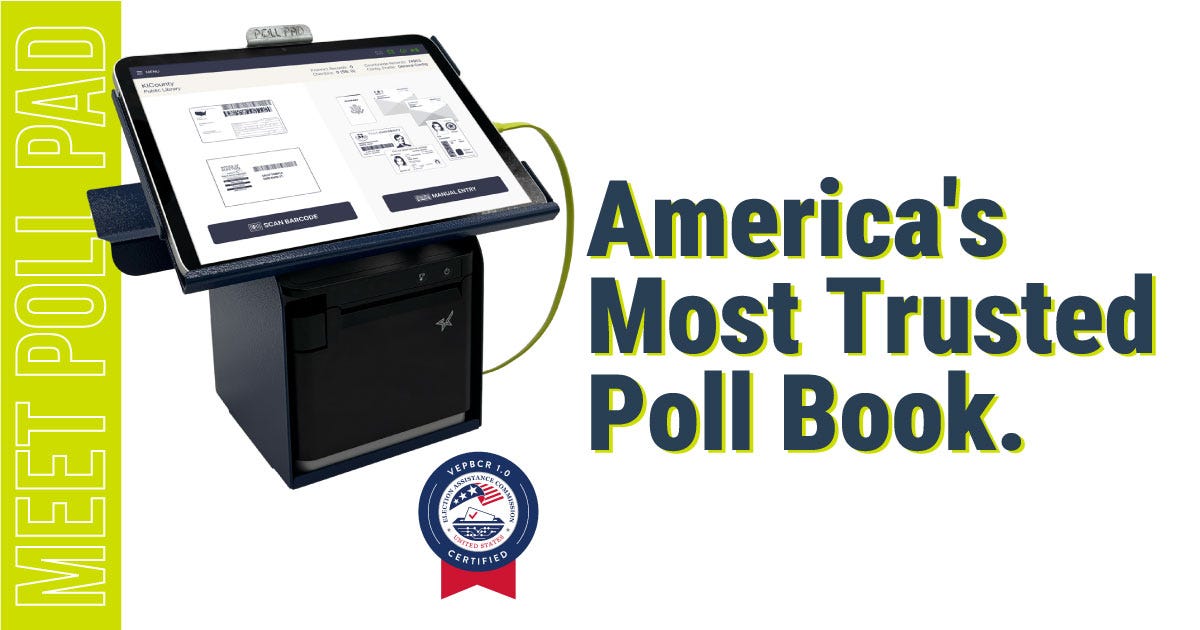
Project Minnesota was among the first to raise security concerns about KNOWiNK’s electronic poll pads, which at the time were being used in more than 71 counties in Minnesota and 37 states nationwide. As some of the contracts show above, that number has steadily increased.
These poll pads connect to the internet and transmit voter data in real time, creating what Project Minnesota describes as a vulnerability for “precision cheating” at the precinct level.
Due to the fact that these devices are linked to state voter rolls, updated in real time, and connected to the internet, someone with access could discreetly mark some voters as inactive, postpone their check-in, or assign them the incorrect ballot—all without leaving a trace.
These systems also allow for real-time data syncing with third-party apps, which raises safety concerns about backdoor access and modifying data. This is precisely why CISA lists them as a cybersecurity concern.
When a system can talk to the outside world during an election, the door is open for strategic disruptions, data wipes, or subtle mismatches that add up to something far bigger than a glitch.
When I first looked into KNOWiNK—the company Leiendecker built to run voter verification for our elections—I found that one town (Oak Grove) had raised safety concerns and made the legal choice to go back to paper.
Rather than receive support, Oak Grove received threats of felony charges from government officials. It seems as if they didn’t have a choice no matter what the law said.
Which is weird, as Leiendecker himself continues to publicly posture as a crusader for paper ballots, a narrative he uses on both the current Liberty Vote website and in the above press release.
TL;DR?
Since the start of Trump’s second term, the Justice Department has sued states over their voter rolls, while DHS agents with less than two hours of training have been combing those records as part of an “Unlawful Voter Initiative.”
Project 2025 proposed to gut the cybersecurity agency tasked with protecting election infrastructure.
The administration gutted much of that capacity, and now the EAC has no commissioners, even as new voting systems continue to be certified.
Meanwhile, former Republican election official Scott Leiendecker owns both Dominion’s successor and the country’s largest commercial electronic-poll-book company.
Voter data, voter verification, election cybersecurity, and voting machinery have all been put into a landscape that has been fundamentally reshaped just months before the midterms.
It’s not just the voting machines. It’s the whole damn system.

Everything you read here exists because of you and people like you.
There is no corporation funding. Dissent in Bloom, no influencer group behind the scenes, and no giant media company cutting checks. I didn’t come from some corporate network. This is citizen journalism. It is just me doing the research and readers choosing to support the work.
Free or paid, every subscription helps keep this platform alive, growing, and independent.
Thank you.